Med spas depend on trust, timing, and consultation bookings. A potential client may call about Botox, fillers, laser treatments, body contouring, facials, skin concerns, or pricing. They may not be ready to book immediately, but they are showing interest. If the front desk is busy checking in clients, answering existing patient questions, and supporting providers, that inquiry can easily be delayed.
An AI receptionist for med spas helps protect those moments. It can answer basic questions, collect contact information, identify the treatment interest, guide prospects toward a consultation, and support after-hours inquiries. Used correctly, it gives the front desk more breathing room without making the client experience feel cold.
Why med spas lose high-intent inquiries
Med spa inquiries often arrive during busy hours. The front desk may be handling arrivals, checkouts, forms, phone calls, provider questions, retail purchases, and appointment changes at the same time. When a new lead calls or messages, the team may not respond fast enough.
That delay matters because aesthetic clients often compare several providers. They may contact more than one med spa before choosing where to book. A fast, helpful first response can create confidence.
The broader AI Employee Suite is useful because the med spa does not need only one bot. It may need an AI receptionist for calls, an appointment setter for consultations, a chatbot for website and social DMs, and follow-up automation for prospects who are interested but not ready.
What an AI receptionist can handle for a med spa
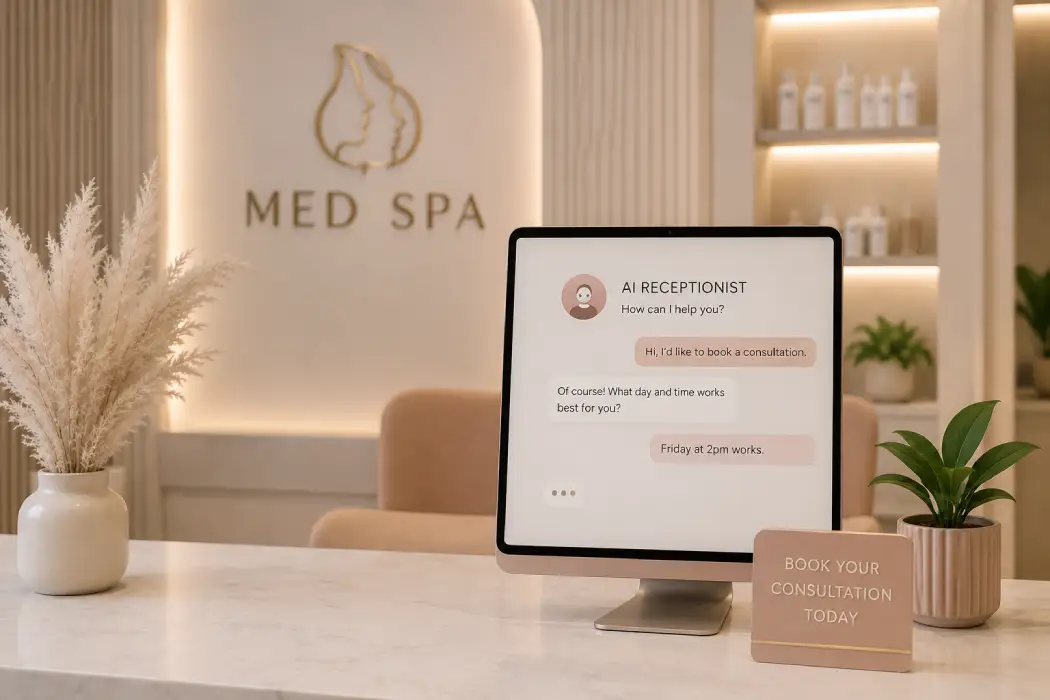
A med spa AI receptionist can greet callers, ask which treatment or concern they are interested in, collect contact details, identify whether they are new or existing clients, and offer the correct next step. For many inquiries, that next step is a consultation.
It can also answer common operational questions such as business hours, location, appointment types, cancellation policy, and how to prepare for a consultation. It can route treatment-specific questions to staff when a human should respond.
The AI should not provide medical advice, diagnose conditions, or promise treatment results. Its role is to capture interest, route questions, and support booking.
Pair reception with appointment setting
A receptionist captures the conversation. An AI appointment setter turns qualified interest into a confirmed time. That matters for med spas because consultations often require the right provider, treatment category, duration, and intake process.
For example, a first-time injectable consultation may have different booking rules than a laser treatment follow-up. A good workflow should reflect those differences instead of sending every lead to the same generic link.
Website and social DMs matter too
Many med spa leads come from Instagram, Facebook, Google, or website visits. Someone may see a before-and-after post, browse a service page, and send a DM asking about cost or availability. A web or social chat agent can respond quickly and guide the person toward consultation booking.
The post on AI chatbot for business lead capture explains this broader workflow. For med spas, chat automation is useful because clients often want a low-pressure way to ask questions before they call.
Harvard Business School Working Knowledge has covered how AI chatbots can support service interactions when used to improve response and help human teams. The same principle applies here: AI should make the client journey easier while humans remain available for trust-sensitive conversations. See the HBS article on AI chatbots and customer service.
Follow-up is where many med spas can improve
A lead may ask about a treatment and not book right away. They may need to compare options, ask a partner, wait for payday, or decide between services. Without follow-up, that lead can go cold.
AI follow-up can send a polite reminder, offer consultation times, answer common next-step questions, or alert the team when the prospect is ready. The tone should be supportive, not pushy. Med spa clients are making personal decisions, so trust matters.
Compliance and privacy considerations
Med spas should be careful with sensitive information. Before launching AI workflows, decide what the AI can collect, what it should avoid, and when the conversation should move to a human. Review consent, privacy, and advertising rules that apply to your location and services.
Avoid claims like guaranteed results, universal treatment suitability, or medical advice. The AI can say a consultation is the right place to determine fit.
What to measure
Track missed inquiries, booked consultations, consultation show rate, after-hours leads captured, social DM response time, and follow-up conversion. Also review transcripts for common questions. Those questions can improve service pages and FAQs.
Build treatment-specific conversation paths
A med spa should not use one generic script for every inquiry. Create different paths for injectables, laser treatments, skincare, body treatments, consultations, existing-client questions, and post-visit follow-up. Each path should collect only the information needed to route the person correctly. This keeps the experience short and relevant.
Treatment-specific paths also help the front desk. Instead of receiving a vague note that says a person is interested, the team can see the treatment category, question, preferred time, and whether the person is new or returning.
This also helps with seasonal promotions. When a treatment offer creates more questions than usual, AI can collect inquiries while the team continues serving booked clients and protect more consultation opportunities after hours.
Bottom line
An AI receptionist for med spas helps capture high-intent inquiries, reduce front desk overload, and move more prospects toward consultations. It should not replace provider judgment or personalized care. It should protect the first response and make it easier for clients to take the next step.
To map where your med spa is losing calls, DMs, or consultation requests, book a free AI automation audit.
Frequently Ask Questions
Can an AI receptionist book med spa consultations?
Yes, when connected to the right booking rules and calendar workflow.
Can it answer treatment questions?
It can answer approved general questions, but medical or suitability questions should be routed to the team.
Is AI a replacement for the front desk?*
No. It is best used to support the front desk, cover gaps, and handle repetitive inquiries.